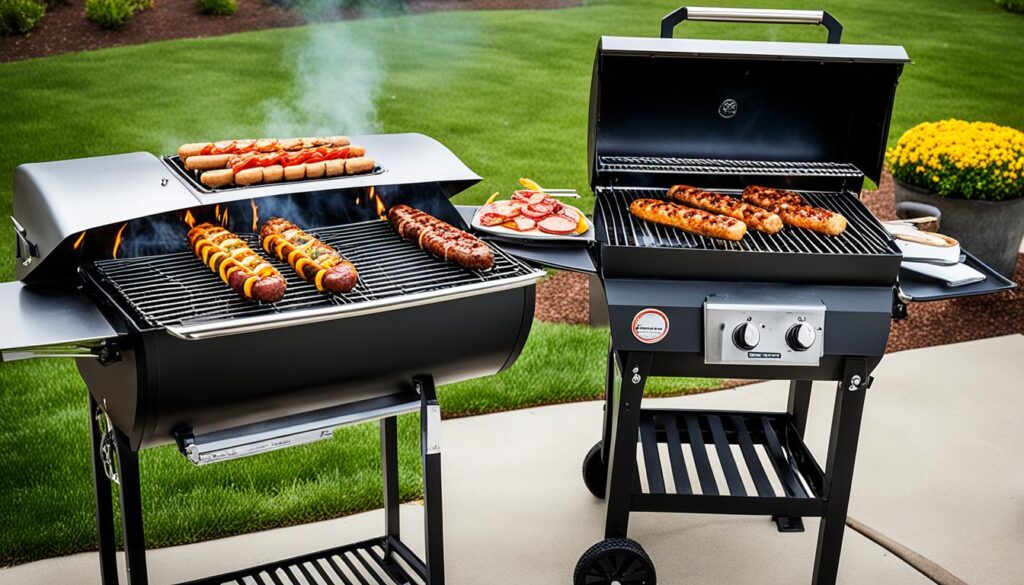
Most gas BBQs sold in the UK today come with metal heat plates rather than lava rocks. Lava rocks were standard in gas grills through the 1970s and 80s, then largely disappeared as manufacturers switched to easier-to-clean alternatives. They’re still available and can be added to most modern gas BBQs, but whether that’s worth doing depends on what you’re actually trying to get from them.
What Lava Rocks Do In a Gas BBQ
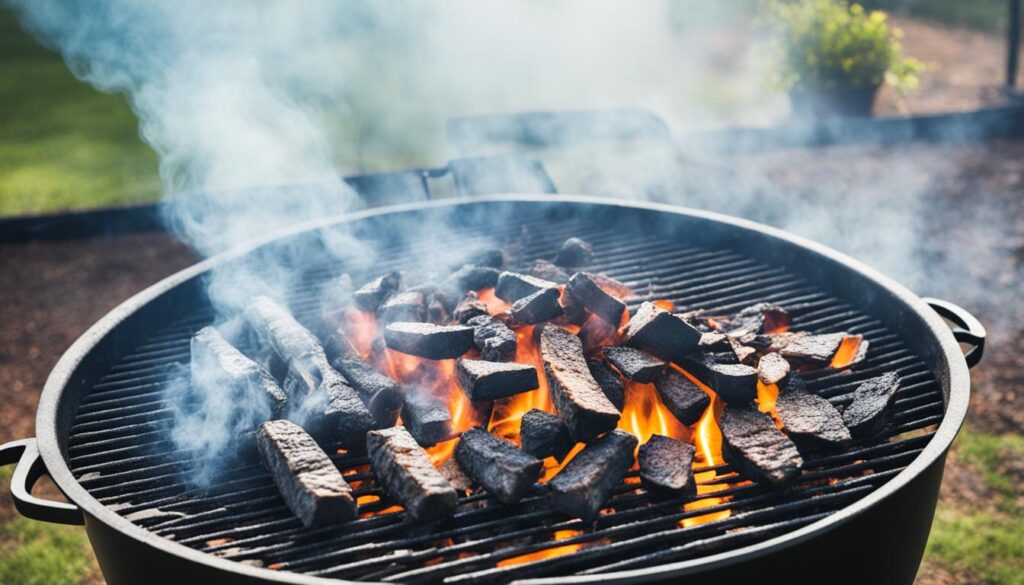
Lava rocks are pieces of porous volcanic basalt, typically 20 to 40mm in size, placed on a shelf or tray between the burners and the cooking grate. They serve two functions: distributing heat and generating flavour from drippings.
The porous structure gives the rock useful thermal properties. Lava rocks absorb heat from the burners and radiate it back upward more slowly and broadly than a flat metal plate would. The result is more even heat across the cooking surface, reducing hotspots directly above burner tubes. The rocks also retain heat after the burners are turned down, which helps maintain cooking temperature when the lid is opened briefly.
The second function is flavour. When fat and juices drip from food onto hot lava rocks, they vaporise and produce smoke that rises back through the cooking grate. This is the same mechanism that makes cooking over charcoal taste different from cooking on a hob. Outback Barbecues, a UK manufacturer, explains it plainly: “The food juices drip on to the lava rock, which turns to vapour and smoke. This rising vapour and smoke bastes the food, as it travels upwards, imparting that unique smoky barbecued flavour.” The porous surface also retains drippings between cooks, which vaporise with each subsequent session and build up the cumulative flavour over time.
Why Most Gas BBQs Stopped Using Lava Rocks
The same porosity that helps lava rocks generate flavour causes their main practical problem. Over time, grease saturates the rocks and builds up in a layer that burns repeatedly on each use. This has two consequences.
The first is increased flare-up risk. Grease-saturated lava rocks can ignite suddenly when more fat hits them, producing tall flames that char food rather than cook it. This becomes progressively worse the longer the rocks are used without being replaced. Food Fire Friends describes the deterioration clearly: “Not all the grease they collected would burn off into tasty wisps of gas. A lot of it just gathered in the pores and stayed there, turning stale over time.”
The second concern is hygiene. Porous rock that can’t be properly cleaned accumulates residue in a way that a metal plate wiped down after use does not. While cooking temperatures above 260°C kill most surface bacteria during active grilling, the concern is about residue building up between sessions. Weber’s own explanation for switching away from lava rocks captures the industry view: “Lava rocks, which were a mess to clean and maintain, not to mention prone to flare ups.”
The solution manufacturers converged on was angled metal bars above the burners: Weber’s Flavorizer bars, or the equivalent flame tamers and heat tents used by Char-Broil, Outback, and others. These vaporise drippings for flavour, deflect grease away from burner ports, and can be cleaned simply by burning off residue or wiping with a grill brush. The maintenance burden is significantly lower.
When Lava Rocks Are Still Worth Using
For cooking that prioritises flavour, lava rocks are a legitimate choice if you’re prepared to manage the maintenance they require. Editor Seán, a UK and Ireland-based barbecue writer, describes lava rock cooking as producing flavour “very close to that of charcoal cooking” because the porous rock retains more drippings for vaporisation and covers the full cooking surface more completely than spaced metal bars. If the gas vs charcoal debate has you wanting more from your gas BBQ, lava rocks are one of the more practical ways to close that gap.
They suit direct high-heat grilling particularly well: steaks, burgers, chicken thighs, lamb chops. Foods that benefit from the smoke hit as juices hit the rocks and vaporise upward.
They’re less suited to extended low-and-slow cooking, where temperature management over time is harder to predict with a deep rock bed, or to anyone who grills frequently but cleans infrequently. In that situation, grease buildup creates a flare-up risk quickly.
How to Add Lava Rocks to a Modern Gas BBQ
Most modern gas BBQs don’t have a lava rock tray as standard. To retrofit one, you need a metal shelf or perforated tray that sits above the burners and below the cooking grate. Some BBQ accessory suppliers sell purpose-made lava rock baskets sized for standard grill widths.
Before converting, check one important thing: adding lava rocks to a grill not designed for them may void the manufacturer warranty. Black Rock Grill, a UK lava rock supplier, specifically flags this in their conversion guidance. If your BBQ is still under warranty, check the terms before proceeding. Saber Grills goes further and states that adding after-market lava rocks to their grills “will cause poor combustion and increase the likelihood of a grease fire and is not recommended.” The stance varies by manufacturer, so it’s worth checking yours.
If you’re proceeding, position the lava rock tray across the burners and spread rocks in a single even layer. One to two layers is enough. A deeper pile retains more grease and becomes harder to burn clean between uses. Preheat with the lid closed for 15 to 20 minutes before cooking. The rocks need this time to reach working temperature and to burn off residue from the previous session.
Check that you have adequate clearance between your burners and cooking grate before buying. You need roughly 60 to 80mm for a tray plus a single rock layer, without the rocks sitting too close to the burner ports.
Cleaning and Replacing Lava Rocks
Don’t wash lava rocks with water. Moisture trapped in porous rock and then heated rapidly can cause cracking or fracturing. The correct cleaning method is heat.
After each cook, turn the burners to high for 10 to 15 minutes with the lid closed. This burns off surface residue. Once the grill has cooled, flip the rocks over so the grease-saturated face points downward toward the burner. This lets subsequent cooks burn off what has built up on the underside. Flip rocks every 4 to 5 cooking sessions as a general guide.
Replace them when rocks are visibly crumbling, are heavily discoloured throughout rather than just on the surface, or when flare-ups become frequent despite regular burn-off sessions. Brian Gunterman, CEO of DDR BBQ Supply, puts the replacement schedule at roughly every 40 to 50 cooks with regular use. For most UK garden BBQ users, that translates to replacing lava rocks every one to two seasons. Keeping the grill clean between uses extends their useful life — there’s more on that in this guide on when to clean a BBQ grill.
Lava Rocks vs Ceramic Briquettes
Ceramic briquettes do the same job as lava rocks: absorb heat, distribute it, and vaporise drippings for flavour. The practical differences are worth understanding before you buy.
Ceramic briquettes are uniform in shape, which means they pack evenly and distribute heat more consistently than irregularly shaped lava rocks. They can also be removed and knocked together to dislodge residue, making cleaning more manageable than the burn-off method lava rocks require. Their typical lifespan is three to five years under regular use, compared to one to two years for lava rocks.
Lava rocks cost less. In the UK, a bag runs roughly £5 to £15 (B&Q stocks the Diall brand, produced in Iceland; Amazon UK carries Black Rock Grill and others). Ceramic briquettes typically run £15 to £30 for a comparable volume. The lower entry cost makes lava rocks a reasonable first choice if you’re experimenting. If you grill regularly and want less maintenance overhead, ceramic briquettes are the more practical ongoing option.
Both are a genuine upgrade over no heat medium at all on a grill that came with its heat plates removed or missing. If your gas BBQ already has well-functioning flame tamers or Flavorizer bars fitted, the improvement in flavour from switching to lava rocks is noticeable but not dramatic. The biggest gains come in older or budget grills where the heat distribution is uneven to begin with.