
In this section, I will explain why using mulch in your garden is not only beneficial but essential. Mulch offers a range of advantages, from improving moisture retention to controlling weeds. By understanding the benefits of mulch and how to apply it effectively, you can enhance the health and beauty of your outdoor space.
- Mulch is important for maintaining moisture in the soil and reducing the frequency of watering.
- It acts as a natural weed barrier, saving you time and effort on weed control.
- Mulch helps regulate soil temperature and protects plant roots from extreme weather conditions.
- Using mulch creates a neat and clean appearance in your garden beds and landscaping.
- There are different types of mulch available, including organic and inorganic options, each with its own benefits.
The Benefits of Mulch
Discover the various benefits of using mulch in your garden. Mulch provides a multitude of advantages that can enhance the health and appearance of your plants and landscaping.
1. Retains Moisture
One of the primary benefits of using mulch is its ability to retain moisture in the soil. By acting as a protective layer, mulch prevents water evaporation and helps to conserve moisture, reducing the need for frequent watering. This is especially beneficial for garden beds, where plants can suffer from drought stress.
2. Weed Control
Mulch acts as a natural barrier against weeds, suppressing their growth and preventing them from taking over your garden beds or landscaping. By blocking sunlight from reaching weed seeds, mulch inhibits their germination. This saves you time and effort in weed control, allowing you to focus on enjoying your garden instead.
3. Soil Temperature Regulation
Mulch helps to regulate soil temperature, preventing rapid temperature fluctuations that can stress plants. During hot summer months, mulch keeps the soil cool, protecting plant roots from heat stress. In colder seasons, mulch acts as an insulating layer, keeping the soil warmer and safeguarding plants from freezing temperatures.
4. Protection from Extreme Weather
Mulch provides a protective layer that shields plant roots from extreme weather conditions. It acts as a buffer against harsh winds, heavy rainfall, and intense sunlight. By preserving soil moisture and temperature, mulch helps plants better withstand adverse weather, contributing to their overall resilience and health.
5. Neat and Clean Aesthetic
In addition to its practical advantages, mulch also enhances the visual appeal of your garden beds and landscaping. With a uniform layer of mulch, your outdoor space acquires a neat and polished appearance. Mulch comes in various colors and textures, allowing you to choose the option that best complements your garden design and personal style.
As you can see, mulch offers numerous benefits for your garden beds and landscaping, including moisture retention, weed control, temperature regulation, weather protection, and aesthetic enhancement. Consider incorporating mulch into your gardening routine to unlock these advantages and create a thriving and beautiful outdoor space.
Types of Mulch
When it comes to mulch, there are various options available to suit your gardening and landscaping needs. Let’s explore the different types of mulch and their benefits.
Organic Mulch
Organic mulch, such as wood chips, straw, or compost, is derived from natural materials. It not only enhances the aesthetics of your garden but also offers numerous benefits. As organic mulch breaks down over time, it adds valuable nutrients to the soil, promoting improved fertility. This type of mulch is an excellent choice if you’re aiming to create a sustainable and eco-friendly garden environment.
Inorganic Mulch
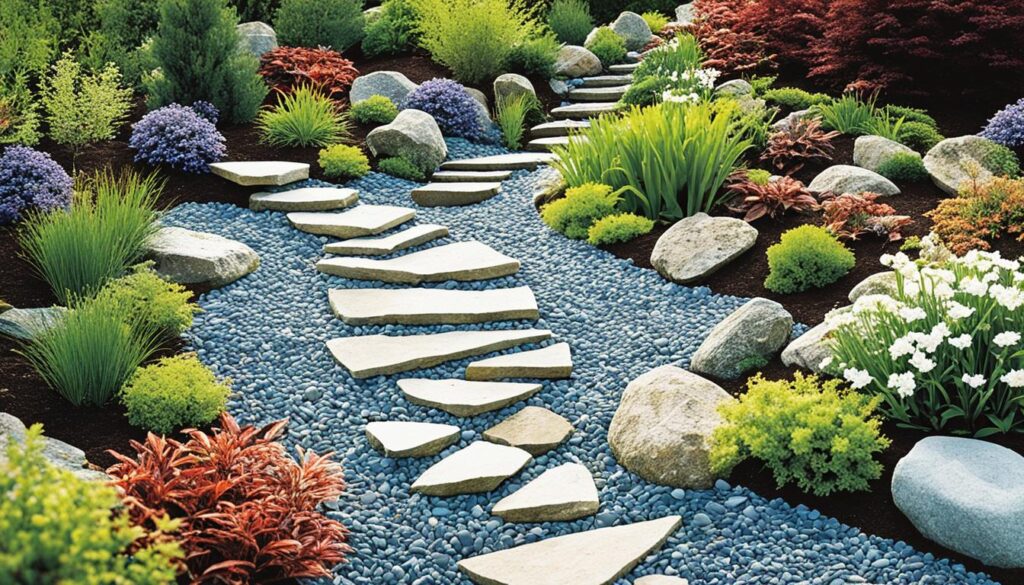
On the other hand, if you prefer a longer-lasting option that requires minimal maintenance, inorganic mulch is a great choice. Materials like rubber mulch or stones fall into this category. Inorganic mulch doesn’t decompose and can withstand weather conditions, making it suitable for areas where you want to control weeds and retain moisture for an extended period. It’s also ideal for high-traffic areas in your garden or landscaping.
When selecting the type of mulch for your garden or landscaping, consider the specific needs of your plants and the overall aesthetic you want to achieve. Organic mulch provides natural fertility as it decomposes, while inorganic mulch offers durability and low-maintenance weed control.

Applying Mulch
Properly applying mulch is essential to maximize its benefits. To begin, prepare the area by removing any existing weeds or debris. This ensures that the mulch will have a clean and suitable surface to be applied to.
Once the area is prepared, apply a layer of mulch around 2-4 inches thick. This helps to provide adequate coverage and insulation for the soil. Spread the mulch evenly, ensuring that it extends to the desired width and depth. A uniform layer of mulch helps to retain moisture and control weed growth effectively.
When applying mulch, it is important to avoid piling it against the stems of your plants. Excessive mulch can lead to issues such as rot or disease. To maintain the health of your plants, create a small gap between the mulch layer and the base of each plant.
Regular mulching is crucial to keep your garden beds and landscaping in top condition. It is recommended to apply mulch at least once a year. However, additional mulch may be added as needed to maintain the desired thickness and provide ongoing benefits.
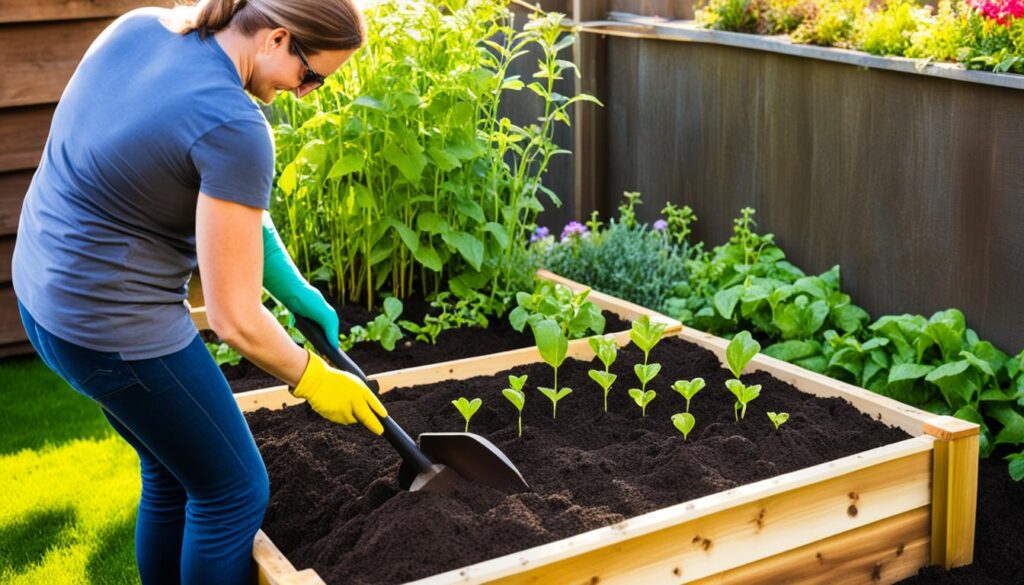
The image shows a person evenly spreading mulch in a garden bed.
Mulch for Garden Beds
Mulching garden beds can greatly improve the health and appearance of your plants. When it comes to choosing the right mulch for your garden beds, there are two main options: organic mulch and inorganic mulch.
Organic Mulch for Garden Beds
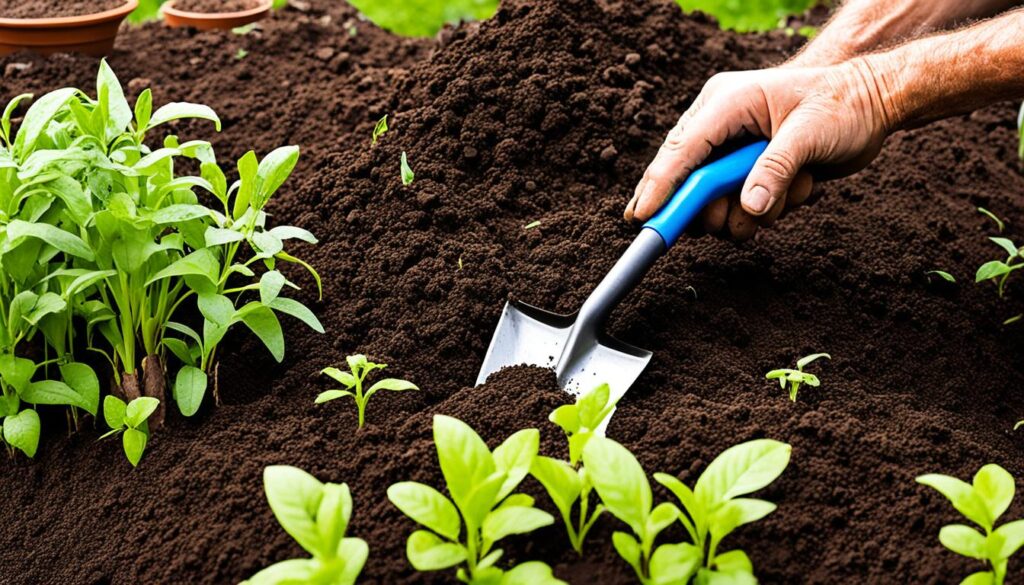
Organic mulch, such as wood chips or compost, is a popular choice for garden beds. Not only does organic mulch enrich the soil as it breaks down, but it also provides essential nutrients to your plants. The slow decomposition process of organic mulch releases valuable substances into the soil, creating a fertile environment for plant growth.
By using organic mulch in your garden beds, you can improve soil moisture retention and prevent soil erosion. Organic mulch acts as a natural insulator, protecting plant roots from extreme temperatures. It also helps to suppress weed growth, reducing the need for frequent weeding.

Inorganic Mulch for Garden Beds
If you’re looking for a low-maintenance option for your garden beds, consider using inorganic mulch. Landscape fabric and gravel are popular choices for inorganic mulch. These materials provide effective weed control by preventing sunlight from reaching weed seeds, hindering their germination and growth.
Using inorganic mulch in your garden beds can also help regulate soil temperature and moisture levels. The insulating properties of landscape fabric and the water-retaining abilities of gravel can benefit your plants by creating a stable environment for their roots.
When selecting the type of mulch for your garden beds, consider the specific needs of your plants, the soil conditions, and the desired aesthetic. Organic mulch offers soil improvement and nutrient benefits, while inorganic mulch provides low-maintenance weed control. Choose the mulch that best suits your garden’s requirements and enjoy healthier, more vibrant plants.
Mulch for Landscaping
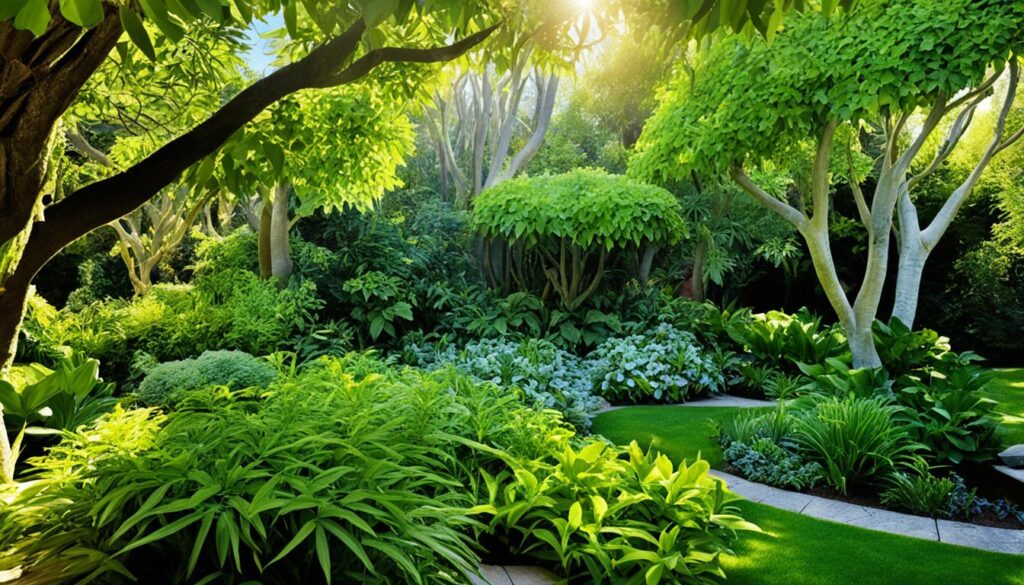
When it comes to landscaping, using mulch can be a game-changer for your outdoor space. Not only does mulch enhance the overall appearance of your garden, but it also offers practical benefits that contribute to the health and longevity of your plants.
There are two main types of mulch to consider: organic mulch and inorganic mulch.
Organic Mulch
Organic mulch, such as bark chips or straw, provides a natural and rustic look to your landscaping. It can be used to create pathways that blend seamlessly with the surroundings or as a protective layer around trees and shrubs. Organic mulch not only adds aesthetic value to your garden but also has the advantage of enriching the soil as it breaks down over time, providing essential nutrients to your plants.
Inorganic Mulch
If you prefer a more contemporary or low-maintenance look for your landscaping, inorganic mulch is the way to go. Options such as stones or rubber mulch provide a clean and polished appearance to your garden. Inorganic mulch doesn’t decompose like organic mulch, making it a long-lasting solution for weed control and moisture retention.
When selecting mulch for your landscaping, consider the specific design and function of your outdoor space. Organic mulch can create a natural and organic feel, while inorganic mulch can achieve a sleek and modern look. Choose the mulch that best suits your preferences and complements the overall aesthetic of your landscaping.
Mulch for Weed Control
Mulch plays a vital role in controlling weeds in your garden and landscaping. By creating a protective barrier between the soil and sunlight, mulch effectively prevents weed seeds from germinating and taking root. This natural weed control method saves you time and effort, allowing you to focus on enjoying your garden rather than constantly battling with unwanted plants.
One of the key benefits of using mulch for weed control is its ability to smother existing weeds. Organic mulch, such as wood chips or straw, naturally suppresses weed growth by blocking sunlight and depriving weeds of the necessary conditions for survival. As the organic mulch breaks down over time, it also enriches the soil, promoting healthier plant growth and making it more difficult for weeds to thrive.
If you prefer an inorganic option for weed control, consider using landscape fabric or gravel as your mulch. These materials act as physical barriers, preventing weeds from penetrating the soil and taking hold. Landscape fabric is particularly effective in preventing weed growth while still allowing water and nutrients to reach your plants. Gravel mulch is not only low-maintenance but also offers a sleek and modern aesthetic for your garden or landscaping.
By incorporating mulch as part of your weed control strategy, you can significantly reduce the need for manual weeding. Whether you choose organic mulch or an inorganic option, mulch provides a natural and effective solution to keep weeds at bay, allowing your plants to thrive in a weed-free environment. Save time, conserve energy, and enjoy a beautiful, well-maintained garden with the help of mulch.

Choosing the Right Mulch for Your Needs
When it comes to selecting mulch for your garden and landscaping, it’s important to consider a few key factors. Taking into account the specific needs of your plants, the desired aesthetic, and the level of maintenance you’re willing to undertake will help you make the right choice. Let’s explore the different types of mulch available and their suitability for various purposes.
Organic Mulch
Organic mulch, such as wood chips, straw, or compost, offers several benefits for your garden beds and landscaping. It enriches the soil as it breaks down, providing essential nutrients for your plants. Organic mulch also helps retain moisture in the soil, reducing the frequency of watering. However, it’s worth noting that organic mulch may require more frequent replenishment to maintain its effectiveness.
Inorganic Mulch
If you’re looking for a long-lasting option with excellent weed control, inorganic mulch may be the right choice for you. Inorganic mulch includes materials like rubber mulch or stones. Unlike organic mulch, inorganic mulch does not decompose, making it a low-maintenance option. However, it’s important to keep in mind that inorganic mulch may not provide the same soil fertility benefits as organic mulch.
When making your decision, consider the specific needs of your plants. Some plants may prefer the nutrient-rich environment provided by organic mulch, while others may require the additional moisture retention offered by both types of mulch. Additionally, think about the aesthetic you want to achieve. Organic mulch typically provides a more natural look, while inorganic mulch can create a contemporary or low-maintenance design.
Ultimately, choosing the right mulch for your needs is a matter of balancing the benefits of organic and inorganic options with the specific requirements of your plants and landscaping. By considering all these factors, you can select the mulch that will best support the health and beauty of your outdoor space.
Conclusion
In conclusion, the use of mulch in your garden and landscaping provides a multitude of benefits. Whether you are looking to retain moisture, control weeds, or enhance the overall appearance of your outdoor space, mulch is the solution. By carefully selecting the right type of mulch – be it organic or inorganic – and applying it correctly, you can enjoy a thriving and beautiful landscape.
One of the key advantages of using mulch is its ability to retain moisture in the soil, reducing the need for frequent watering. This not only saves you time and effort but also helps to conserve water, making it an environmentally-friendly choice for your garden beds and landscaping projects.
Another benefit of mulching is its effective weed control properties. By creating a barrier between the soil and sunlight, mulch prevents weed seeds from germinating, reducing the need for manual weeding. Whether you opt for organic mulch, which naturally smothers existing weeds, or inorganic mulch, which acts as a physical barrier, you can significantly reduce the time spent battling unwanted plants.
Furthermore, mulch contributes to the overall aesthetic appeal of your outdoor space. It creates a neat and tidy appearance for garden beds and landscaping, enhancing the visual appeal of your plants and creating a polished, well-maintained look. With a wide range of mulch options available, you can choose the one that best complements your garden design and personal style.
In summary, incorporating mulch into your gardening and landscaping routine is a wise choice. By utilizing its benefits – moisture retention, weed control, and improved aesthetics – you can create a beautiful and flourishing outdoor space that you can enjoy all year round. So why wait? Start reaping the rewards of mulching today and transform your garden into a vibrant oasis.