
Have you ever noticed a foul smell emanating from your potting soil, making your garden less pleasant to be in? This unpleasant odor can be quite off-putting, but fear not, because I’m here to help you understand why your potting soil smells like poop and how to address this issue effectively.
It’s important to note that a bad odour from your potting mix is not uncommon and can be caused by various factors. By identifying the root cause and implementing the appropriate solutions, you can eliminate the foul smell and create an inviting environment for your plants to thrive.
Key Takeaways:
- Potting soil can emit a poop-like scent due to factors such as inadequate drainage, organic decomposition, and imbalanced compost.
- Improving drainage and moisture retention can reduce unpleasant odors in potting soil.
- Avoid excessive organic matter in your potting mix to prevent over-decomposition and the resulting foul smell.
- Proper watering techniques and preventing mold and fungus growth are essential for maintaining odor-free potting soil.
- Identify and address nutrient imbalances to improve the overall health of your potting soil and eliminate odors.
Understanding the Importance of Proper Soil Odor
When it comes to gardening, we all know that healthy soil is essential for plant growth. But did you know that the odor of soil can also provide important insights into its condition? That’s right, the proper soil odor plays a significant role in indicating the overall health and fertility of your garden.
So, why is it important to pay attention to the smell of your soil? Well, the significance of soil smell lies in its ability to reveal certain underlying issues that may affect the well-being of your plants. By taking note of the odors emanating from your potting soil, you can detect potential problems and take necessary actions to address them before they cause irreversible damage.
But what does “proper soil odor” actually mean? It refers to a natural and mild earthy scent that is often associated with healthy soil. Think of the fresh, earthy aroma you encounter during a countryside walk or after a heavy rain. That’s the kind of smell you want to experience when you dig your hands into your garden soil.
On the other hand, a foul and unpleasant smell in your potting soil is a clear indication that something is amiss. It could be an indicator of excessive moisture, a nutrient imbalance, the presence of anaerobic bacteria, or even poor compost quality. By understanding the significance of soil smell, you can identify and address these underlying issues promptly to keep your plants thriving.
Keeping Your Garden Healthy
Proper soil odor acts as a guide to maintaining a healthy garden. Just as your sense of smell alerts you to potential dangers in your environment, the smell of your soil informs you about the conditions that may affect your plants’ well-being. By being attentive to the odor of your potting soil, you can take proactive steps to ensure that your garden remains a hospitable environment for your plants to flourish.
In the following sections, we will explore common causes of foul odor in potting soil and provide practical solutions to address these issues. By gaining a deeper understanding of the factors contributing to bad smells and implementing appropriate remedies, you can maintain an odor-free and nurturing environment for your beloved plants.
Common Causes of Foul Odor in Potting Soil
When it comes to the unpleasant odor in potting soil, there are several common causes that can contribute to this issue. By understanding and addressing these factors, you can eliminate the smelly potting mix and create a healthier environment for your plants.
Poor Drainage and Water Retention
Inadequate drainage is one of the leading causes of bad smell in soil. When water is unable to flow out of the potting mix properly, it can create a stagnant environment that promotes the growth of anaerobic bacteria. These bacteria produce foul-smelling compounds, resulting in a smelly potting mix. To improve drainage, ensure that your pots have sufficient drainage holes and use a well-draining potting mix.
Organic Decomposition
Another common cause of odor in potting soil is organic decomposition. As organic matter breaks down, it releases gases that can contribute to the unpleasant smell. This organic decomposition can occur due to excessive organic matter in the soil or lack of a balanced compost mix. It’s essential to maintain a proper compost balance and avoid using excessive amounts of organic material to prevent over-decomposition and the associated bad odor.
Imbalanced Compost
An imbalanced compost mix can also lead to a smelly potting mix. If the compost used in your potting soil contains a high concentration of nitrogen-rich materials, it may result in an overpowering ammonia-like smell. Conversely, if the compost is too dry and lacks the necessary moisture content, it can contribute to an unpleasant odor. It’s crucial to ensure a well-balanced compost mix to prevent these issues.
Inadequate Drainage and Moisture Retention
When it comes to potting soil, inadequate drainage and excessive moisture can be major culprits behind the foul smell. These conditions create a perfect breeding ground for anaerobic bacteria, which release unpleasant odors as they break down organic matter. It’s important to address these issues to ensure a healthier and more pleasant gardening experience.
To improve drainage, consider using a potting mix specifically designed for optimal water flow. Look for mixes that contain coarser ingredients like perlite or sand, as they help create air pockets and facilitate water drainage. Additionally, using pots with drainage holes and placing a layer of gravel or broken pottery at the bottom can further enhance drainage.
Moisture retention is equally important. While it’s crucial to avoid overwatering, it’s also essential to provide adequate moisture to prevent the soil from drying out completely. Incorporating water-retaining additives like peat moss or vermiculite into your potting mix can help maintain moisture levels without causing waterlogging.
Another effective method for improving drainage and moisture levels is to monitor the watering frequency. Rather than following a strict schedule, assess the soil’s moisture content by feeling it with your fingers. If the top inch of soil feels dry, it’s time to water. This approach ensures that the plants receive sufficient moisture without causing excess water buildup.
Preventing Soil Compaction
Soil compaction can also hinder drainage and lead to odor issues. Over time, the weight of the soil settles and reduces pore space, limiting water movement and trapping moisture. To prevent soil compaction, avoid excessive foot traffic on garden beds and refresh the soil annually by loosening it with a fork or cultivating tool. This aeration process helps maintain optimal drainage and moisture balance.
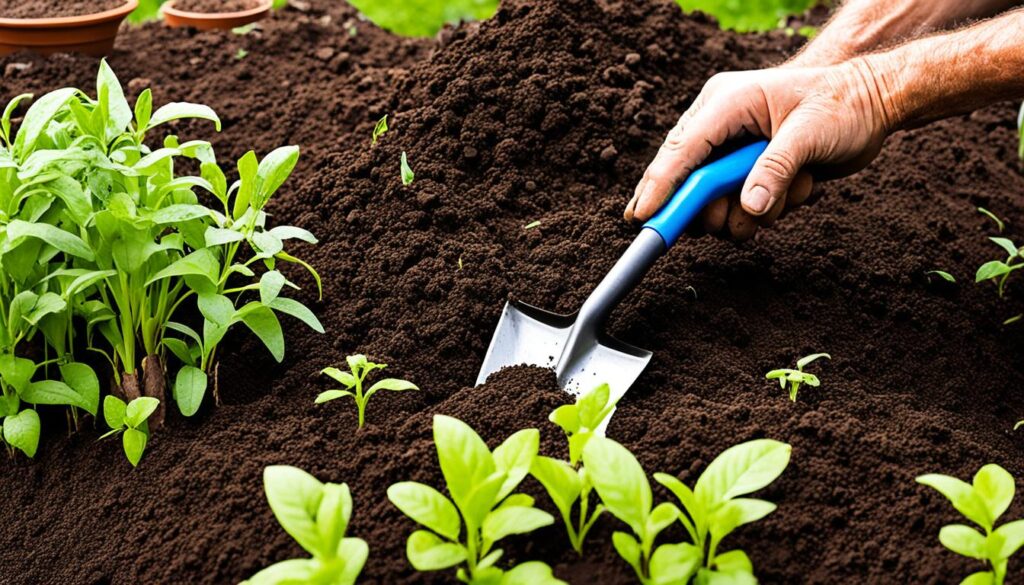
By addressing inadequate drainage and moisture retention in potting soil, you can create a healthier environment for your plants and eliminate unpleasant odors. The image below illustrates the importance of optimal moisture levels for healthy plant growth:
Next, we’ll explore another factor that contributes to foul odors in potting soil: organic decomposition and compost imbalance.
Organic Decomposition and Compost Imbalance
In order to prevent your potting soil from emitting an unpleasant poop-like scent, it is essential to understand the role of organic decomposition and the importance of maintaining a balanced compost.
When there is an excessive amount of organic matter in the potting soil, it can undergo decomposition, resulting in the release of foul odors. This decomposition process is natural, but an imbalance in the compost can accelerate it, leading to a stronger and more noticeable scent.

To prevent organic decomposition and compost imbalance, it is crucial to ensure the correct balance of organic matter in your potting soil. Avoid adding excessive amounts of compost or other organic materials, as this can tip the balance and contribute to the offensive smell. Keep in mind that it’s important to strike a balance between providing the necessary nutrients for your plants and avoiding an overload of organic matter.
One way to maintain a healthy compost balance is by regularly testing the nutrient levels in your soil. This will help you determine if there is an excessive buildup of organic matter that could be contributing to the odorous decomposition. If the tests indicate an imbalance, you can adjust the ratio of organic matter in your potting soil accordingly.
Another method to prevent excessive organic decomposition is by maintaining proper aeration in your potting soil. Ensure that your plants’ root systems have sufficient access to oxygen, as this will encourage aerobic decomposition processes, which are less likely to produce foul odors.
By understanding the factors that contribute to organic decomposition and compost imbalance, you can take proactive steps to prevent and address the poop-like scent emanating from your potting soil. In the next section, we will explore other common causes of foul odors in potting soil and discuss effective solutions for each.
Identifying and Addressing Overwatering Issues
Overwatering is a common mistake that can lead to overwatering issues and contribute to bad odors in potting soil. It’s important to understand the signs of overwatering and the proper techniques for watering plants correctly to avoid these problems.
One of the signs of overwatering is excessive soil moisture. Gardeners should pay attention to the soil’s moisture level before watering. To do this, check the moisture content by inserting your finger about an inch into the soil. If it feels wet or overly damp, hold off on watering. Overwatering can suffocate plant roots and encourage the growth of anaerobic bacteria, which can result in a foul smell.
Another sign of overwatering is wilting or yellowing leaves. Though it may seem contradictory, overwatering can actually cause plant leaves to wilt and turn yellow. This is because excessively wet soil prevents the roots from absorbing oxygen sufficiently, resulting in waterlogged plants. If you notice wilting or yellowing leaves, it’s a good indication that you may be overwatering your plants.
Proper watering techniques
To address overwatering issues, it’s crucial to follow proper watering techniques. Here are a few tips to help you water your plants correctly and prevent overwatering:
- Water your plants only when the top inch or two of soil has dried out. This allows for adequate oxygenation of the root system and prevents waterlogged conditions.
- Ensure proper drainage by using pots with drainage holes. Excess water should be able to freely flow out of the container.
- Water deeply when you do water. Instead of lightly sprinkling the soil surface, give the plants a thorough watering until water begins to drain out of the bottom of the pot. This helps encourage the roots to grow deeper, making them more resilient to drying out and reducing the risk of overwatering.
- Consider the specific needs of each plant. Different plants have different water requirements, so it’s important to understand the specific needs of each plant you have in your garden. Some plants prefer drier conditions, while others require more moisture. Adjust your watering schedule accordingly.
By identifying the signs of overwatering and adopting proper watering techniques, you can prevent overwatering issues and maintain healthy, fresh-smelling potting soil. Remember, moderation is key when it comes to watering your plants.
Preventing Mold and Fungus Growth
Mold and fungus growth can cause unpleasant odors and pose a threat to the health of your plants. Taking proactive measures to prevent fungal diseases and control mold in soil is essential for maintaining a thriving garden. Here are some techniques and preventive measures to keep your potting soil mold and fungus-free:
1. Ensure Proper Drainage
Excess moisture creates a favorable environment for mold and fungus to thrive. To prevent mold growth, ensure your potting soil has adequate drainage. Use well-draining pots with plenty of drainage holes and avoid overwatering your plants.
2. Use Sterilized Potting Mix
Using sterilized potting mix can help prevent the introduction of mold spores and fungal pathogens into your soil. Look for potting mix that is specifically labeled as sterilized or pasteurized to ensure the highest level of protection against mold and fungus growth.
3. Practice Proper Watering Techniques
Water your plants at the base, directly into the soil, rather than overhead watering, which can promote moisture accumulation on the soil surface. This will help minimize the conditions that facilitate mold and fungus growth.
4. Use Disease-Resistant Plants
Choose plant varieties that are known to be more resistant to fungal diseases. Disease-resistant plants have built-in mechanisms that help them fight off common pathogens, reducing the risk of mold and fungus growth in your soil.
5. Provide Adequate Air Circulation
Good air circulation around your plants can help prevent the buildup of excess moisture and create an inhospitable environment for mold and fungus. Space your plants appropriately and avoid overcrowding to promote airflow.

Managing Nutrient Imbalances
When it comes to maintaining healthy potting soil, it’s essential to address any nutrient imbalances that may be present. Nutrient imbalances can not only impact the health of your plants but also contribute to the odorous nature of your potting mix.
To ensure nutrient-rich soil and prevent soil nutrient deficiency, it’s crucial to assess and correct any imbalances that may exist. One effective method for assessing nutrient deficiencies is through soil testing. Soil testing allows you to identify specific nutrient imbalances and tailor your approach to correcting them.
Once you have identified the nutrient deficiencies in your soil, it’s time to take action. There are various methods you can employ to correct these imbalances and improve the overall health of your soil.
1. Adding Organic Matter
One way to address nutrient imbalances in your potting soil is by adding organic matter. Compost, manure, and other organic materials can help enhance nutrient availability and promote a healthy soil ecosystem. Incorporating organic matter into your soil can improve nutrient retention, water-holding capacity, and overall soil structure.
2. Using Balanced Fertilizers
Another approach to managing nutrient imbalances is through the use of balanced fertilizers. These fertilizers contain a mix of essential nutrients in the optimal ratios needed for plant growth. By applying balanced fertilizers according to the recommended dosage, you can help correct nutrient deficiencies and promote healthy plant development.
3. Crop Rotation
Crop rotation is an effective technique that can help prevent and alleviate nutrient imbalances. By rotating the types of plants you grow, you can vary their nutrient needs and minimize the depletion of specific nutrients from the soil. This practice can help maintain a more balanced nutrient profile in your potting soil over time.
By addressing nutrient imbalances in your potting soil, you can create a nutrient-rich environment that supports healthy plant growth and eliminates odorous potting mix. Remember to regularly monitor your soil’s nutrient levels and make adjustments as needed to ensure the long-term health and vitality of your plants.
Dealing with Persistently Smelly Potting Soil
If the persistently smelly soil in your potting mix is causing you distress, don’t worry! I have some troubleshooting tips and additional measures that can help eliminate that strong odor in the soil and make your gardening experience more enjoyable.
1. Proper Aeration
One possible cause of persistently smelly potting soil is poor aeration. Insufficient airflow can lead to anaerobic conditions, resulting in a foul smell. To address this, try aerating the soil by gently loosening it with a garden fork or chopstick. This helps create channels for oxygen to reach the roots and discourages the growth of odor-causing bacteria.
2. Adjusting Moisture Levels
Excessive moisture is another common culprit behind persistent soil odor. Make sure you are not overwatering your plants, as this can lead to waterlogged conditions that favor the growth of anaerobic bacteria. Allow the soil to dry out slightly between watering, and consider using a well-draining potting mix.
3. Adding Amendments
If adjusting aeration and moisture levels doesn’t eliminate the foul smell, you can try incorporating organic amendments into the soil. Adding materials such as compost, leaf mulch, or perlite can improve drainage, increase microbial activity, and promote a healthier soil ecosystem, ultimately reducing odor.

4. Replacing the Soil
If all else fails, it may be necessary to replace the potting soil entirely. Remove the existing soil from the pot and dispose of it responsibly. Clean the pot thoroughly before adding fresh, high-quality potting mix. This can help eliminate any persistently smelly compounds and prevent the odor from returning.
By following these troubleshooting tips and taking additional measures, you can say goodbye to the strong odor in your potting soil and create a more pleasant environment for your plants to thrive. Remember, a sniff-free garden starts with healthy soil!
Maintaining Odor-Free Potting Soil
Now that you’ve addressed the unpleasant odor in your potting soil, it’s essential to maintain its freshness. By following these ongoing maintenance practices, you can ensure that your potting soil remains odor-free, creating a pleasant and healthy environment for your plants.
To maintain an odor-free potting mix, regularly check the moisture levels of the soil. Overwatering can lead to soil odors, so water your plants only when the top inch of the soil feels dry. Additionally, ensure that your pots have proper drainage holes to prevent water from accumulating and causing unpleasant smells.
Incorporate good organic practices into your gardening routine by regularly adding compost to your potting mix. This will promote healthy soil structure and prevent organic decomposition that can produce foul odors. Be mindful of the compost balance, avoiding excessive use that could lead to an imbalance and subsequent odorous issues.
Lastly, store your potting soil in a cool, dry place to prevent mold and fungi growth. These can not only cause bad odors but also harm your plants. By practicing these simple maintenance techniques, you’ll enjoy a fresh-smelling potting mix and a thriving garden all year round.