
Perlite is a popular soil amendment used in potting soil to improve drainage and aeration. This lightweight and porous material, made from expanded volcanic glass, offers numerous benefits for plant growth and is especially useful in plant propagation, cuttings, and seed sowing. Whether you’re an experienced gardener or just starting out, understanding the purpose and advantages of perlite in potting soil can help you create an optimal environment for your plants.
Perlite is widely used in container gardening due to its ability to improve soil structure. By adding perlite to potting soil, water is encouraged to drain through, preventing the roots from sitting in damp soil. This helps prevent root rot and provides the ideal balance of moisture for plants to thrive. Furthermore, perlite aids in aeration by creating air pockets within the soil, allowing the roots to access oxygen more easily.
Another advantage of perlite is its moisture retention properties. While perlite improves drainage, it also has the ability to retain moisture, ensuring that plants have access to water when they need it. This is particularly beneficial for cuttings and seed sowing, as it provides a moist environment for delicate roots and seedlings to grow.
Besides its horticultural uses, perlite is also pH neutral, disease-free, and sterile. This makes it a safe and reliable addition to potting soil, suitable for a wide range of plants. Additionally, perlite has long-lasting effects and remains effective for many years, making it a cost-effective choice for gardeners.
In conclusion, perlite is used in potting soil for its ability to improve drainage, enhance aeration, retain moisture, and provide a disease-free and sterile environment for plants. Its lightweight and porous nature make it an ideal choice for container gardening, plant propagation, and various other horticultural applications.
Key Takeaways:
- Perlite is a lightweight and porous soil amendment made from expanded volcanic glass.
- It improves drainage and aeration in potting soil.
- Perlite aids in moisture retention and creates a moist environment for delicate roots and seedlings.
- It is pH neutral, disease-free, and sterile.
- Perlite remains effective for many years and is suitable for a wide range of plants.
What is Perlite?
Perlite is a lightweight granular material made from expanded volcanic glass that has been heated to high temperatures. It is often used as a soil amendment in gardening and horticulture. The appearance of perlite resembles little bits of polystyrene, and it has a white color.
One of the key characteristics of perlite is its extremely porous nature. This allows perlite to absorb water while also improving drainage in the soil. The porosity of perlite is due to its expanded structure, which creates air pockets within the material. These air pockets allow for better aeration of the roots and facilitate healthy plant growth.
In addition to its lightweight and porous properties, perlite is also sterile and easy to handle. It does not introduce any pathogens or weed seeds into the soil, making it a safe choice for gardening. Perlite is also long-lasting and does not break down over time, providing consistent benefits to plants.
Another advantage of perlite is its neutral pH. It is neither alkaline nor acidic, which means that it does not significantly affect the pH level of the soil. This makes perlite suitable for a wide range of plants, as it can be used in various soil types without causing imbalances.
Overall, perlite is a versatile and beneficial material for gardening and horticulture. Its lightweight nature, improved drainage, and neutral pH make it an excellent choice for enhancing the growth and health of plants.
How to Use Perlite
Perlite can be used in various ways to improve the quality of potting soil. It offers several benefits that aid in creating optimal growing conditions for plants.
Perlite for Drainage
One of the primary uses of perlite is to improve drainage in potting soil. It is especially beneficial for plants that are sensitive to moisture, such as succulents. By adding perlite to the potting compost, it creates air pockets and encourages water to drain through, preventing the roots from sitting in damp soil. This promotes healthy root growth and reduces the risk of root rot.
Perlite for Cuttings
Perlite is also useful for propagating plants through cuttings. When preparing cuttings, perlite can aid in water retention and provide a moist environment for delicate roots to develop. This helps to increase the success rate of root growth and the establishment of new plants.
Perlite for Seed Sowing
When starting seeds, perlite can be incorporated into the seed sowing mix. Its water retention properties help to maintain the necessary moisture levels for seed germination. Perlite creates a light and airy environment for young seedlings, allowing for healthy root growth and reducing the risk of damping off.
Perlite vs Vermiculite
Perlite is often compared to vermiculite, another popular soil amendment. While both perlite and vermiculite aid in water retention, perlite excels at drainage and aeration. Vermiculite, on the other hand, has better water and nutrient retention properties. The choice between perlite and vermiculite depends on the specific needs of your plants and the desired soil characteristics.
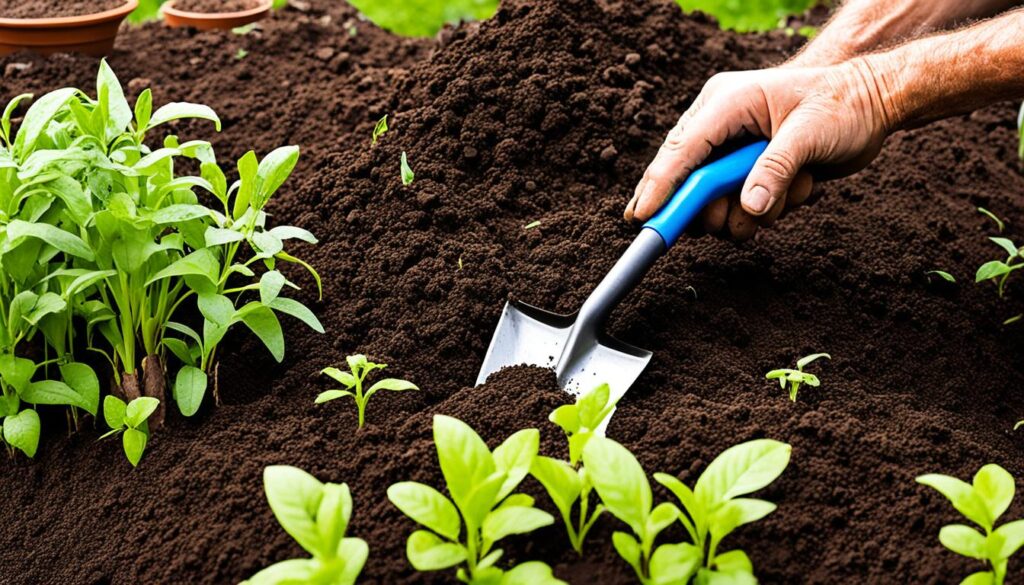
To visually illustrate the benefits of perlite, here’s an image of perlite used in potting soil:

Overall, perlite is a versatile addition to potting soil that improves drainage, aids in propagation, and enhances seed germination. Its unique properties make it a valuable tool for gardeners looking to create optimal growing conditions for their plants.
Perlite vs Vermiculite
When it comes to improving potting soil, both perlite and vermiculite are commonly used soil amendments. While they serve a similar purpose, there are key differences between the two. Understanding these differences can help you choose the right amendment for your plants.
One key difference is in their water and nutrient retention properties. Vermiculite has superior water and nutrient retention compared to perlite, making it an excellent choice for plants that require more moisture. It can hold onto water and nutrients for longer periods, providing a consistent supply to the roots.
On the other hand, perlite excels in drainage and aeration. It is a lightweight material with porous granules that create air pockets in the soil, facilitating oxygen flow to the roots and preventing waterlogged conditions. This makes it ideal for plants that prefer well-draining soil.
Another difference lies in their impact on seed germination. Vermiculite’s moisture retention capacity creates a favorable environment for seed germination, promoting faster and more successful seedling development. Perlite, with its excellent drainage properties, helps prevent seed rot and encourages healthy root formation.
While perlite and vermiculite have their unique benefits, they can also be used together to achieve the optimal balance of water retention and drainage in potting soil. By combining the two amendments, you can ensure that your plants receive adequate moisture while maintaining well-aerated soil.
Another advantage of using vermiculite in potting soil is its ability to improve soil structure. The tiny, sponge-like particles of vermiculite help create a light and friable texture, making it easier for roots to grow and plants to thrive.
Overall, the choice between perlite and vermiculite depends on your specific gardening needs. Consider the water requirements of your plants, the desired soil drainage, and the conditions required for successful seed germination. Both perlite and vermiculite can play important roles in creating optimal growing conditions for your plants.
Uses of Perlite in Horticulture
Perlite offers a wide range of horticultural uses that contribute to the success of gardening and plant cultivation. Let’s explore some of its key applications:
Perlite for Plant Propagation: Perlite is highly effective in plant propagation, providing an optimal environment for cuttings to root and new plants to develop strong roots.
Perlite for Soil Conditioning: Heavy silt or clay soils can hinder plant growth due to poor drainage and limited aeration. Adding perlite to the soil improves both these factors, enhancing aeration and promoting better water drainage.
Perlite for Turf Dressing: Turf dressing is essential for maintaining healthy lawns and promoting root development. Using perlite as part of the dressing can help improve soil structure, ensuring proper moisture retention and better overall turf growth.
Perlite for Hydroponics: In hydroponic systems, where plants grow without traditional soil, perlite serves as an excellent medium for supporting plant roots. Its lightweight nature and superior water-holding capacity make perlite an ideal choice for hydroponic cultivation.
As seen, perlite plays a vital role in various horticultural applications, from propagation to soil conditioning, turf dressing, and hydroponics. Its versatility and remarkable properties make it a valuable asset for gardeners and horticulturists seeking optimal plant growth and cultivation success.
How to Buy Perlite
When it comes to purchasing perlite, there are several options available to you. If you prefer to shop locally, you can find perlite at nurseries, garden centers, and large DIY stores such as B&Q, Homebase, and Wilko. These stores typically carry a variety of perlite products to suit your specific needs.
Alternatively, buying perlite online is a convenient option. Many online retailers offer a wide selection of perlite products, allowing you to compare prices and read customer reviews. You can easily order perlite from the comfort of your own home and have it delivered right to your doorstep.
When buying perlite, it is essential to ensure that you are purchasing 100% perlite and not a soil or soilless blend. This will ensure that you get the full benefits of perlite’s lightweight and porous properties.
With the numerous options available, you’ll have no trouble finding a reliable source for perlite to meet your gardening needs.
Benefits of Perlite in Potting Soil
When it comes to potting soil, the addition of perlite offers several benefits that contribute to the overall health and growth of plants. Let’s explore some of the advantages:
- Improved drainage: Perlite’s porous nature allows water to flow through the soil freely, preventing waterlogging and ensuring the roots receive adequate oxygen.
- Enhanced aeration: The presence of perlite creates air pockets within the soil, promoting optimal aeration and facilitating root development.
- Moisture retention: Despite its excellent drainage properties, perlite is also capable of retaining moisture, providing a balanced environment for plants.
- Disease-free and sterile: Perlite is free from diseases, pests, and weed seeds, making it a safe and sterile addition to potting soil.
- pH neutrality: With a neutral pH level, perlite does not affect the acidity or alkalinity of the soil, making it suitable for a wide range of plants.
- Long-lasting effects: Perlite remains effective in potting soil for many years, ensuring sustained benefits for plant growth and development.
Whether you’re an experienced gardener or a beginner, utilizing perlite in your potting soil can greatly improve the overall quality and health of your plants. Its ability to enhance drainage, aeration, and moisture retention, all while being disease-free and pH neutral, makes perlite an invaluable soil amendment. Consider incorporating perlite into your potting mix for healthier, thriving plants.

Using Perlite Safely
When it comes to handling perlite, it is essential to prioritize safety. By taking a few simple precautions, you can ensure the safe and proper use of perlite in your gardening endeavors.
Dampening Perlite
One of the first steps to handle perlite safely is to dampen it with water before use. Perlite can be dusty, and dampening it helps minimize the risk of inhalation. Simply pour water over the perlite and give it a good mix until it becomes moist. This simple step can greatly reduce the amount of dust particles released into the air.
Avoiding Inhalation
While dampening perlite helps keep dust levels low, it is still a good idea to take precautions to avoid inhaling any particles. When working with perlite, especially in dry form, wearing a dust mask and protective glasses is recommended. These items create a barrier between you and the fine particles, providing an additional layer of protection.
Using Perlite in Bulk
If you are using perlite in bulk quantities, such as for large gardening projects or commercial use, there is another safety measure you can take. Rather than using dry perlite straight from the bag, pour water into the bag and let it soak. Allowing the perlite to absorb the water can help control the release of dust particles and further minimize the risk of inhalation.
Safety Precautions
When handling perlite, it’s important to follow these safety precautions:
- Always dampen perlite before use to minimize dust and inhalation risks.
- Wear a dust mask and protective glasses when working with perlite.
- Pour water into bags of perlite in bulk and let it soak before using.
By following these safety measures, you can fully enjoy the benefits of perlite while keeping yourself protected.
Perlite and Organic Gardening
Although perlite is technically an inorganic material, it is approved for use in organic gardening and is considered organic-friendly. Organic certification bodies, such as OMRI, have listed perlite as suitable for organic agriculture. While perlite undergoes an industrial process to expand and become the lightweight material used in gardening, it is still a naturally occurring mineral extracted from the earth. In organic gardening, the term “organic” refers to naturally produced materials without significant chemical changes. Perlite provides many benefits to organic gardeners, such as improved soil structure, aeration, and drainage.
Organic gardening relies on natural and sustainable practices that promote soil health and biodiversity. It emphasizes the use of organic materials and techniques to nourish and protect plants without relying on synthetic fertilizers or pesticides. Perlite, despite being technically inorganic, contributes to the principles of organic gardening by enhancing soil conditions and benefiting plant growth.
When used in potting soil, perlite improves soil structure by preventing compaction and allowing for better root development. Its lightweight and porous nature ensure adequate aeration for plant roots, preventing the risk of root rot. Additionally, perlite’s excellent drainage capabilities help prevent waterlogged soil, creating a healthy environment for plants.
Organic Certification of Perlite
Perlite has received organic certification from reputable organizations, including the Organic Materials Review Institute (OMRI). OMRI’s certification confirms that perlite meets the stringent standards set for use in organic agriculture. This approval reinforces perlite’s compatibility with organic gardening practices and assures organic gardeners that they can confidently incorporate perlite into their gardening routines.
OMRI’s certification process includes a rigorous evaluation to ensure that organic products are free from synthetic additives and comply with organic farming principles. Perlite’s natural origin and minimal processing make it an ideal candidate for organic certification. Organic gardeners can trust that perlite meets the criteria for organic gardening and aligns with their commitment to sustainable and natural practices.
Inorganic vs Organic Materials
Understanding the differentiation between inorganic and organic materials is crucial in organic gardening. Inorganic materials, like perlite, are substances that occur naturally but undergo processes that may alter their chemical structure. While perlite is heated and expanded during production, it remains fundamentally unchanged in terms of its mineral composition. This preservation of its natural properties allows perlite to be classified as organic-friendly.
On the other hand, organic materials in gardening refer to substances derived from living organisms, including plant matter, animal manure, and certain minerals. These materials decompose over time and release valuable nutrients into the soil, supporting healthy plant growth. While perlite itself does not provide nutrients to plants, it contributes to soil health by improving its physical properties, creating an environment where organic matter can decompose effectively.
Benefits for Organic Gardeners
Using perlite in organic gardening offers a range of benefits for gardeners committed to organic practices:
- Improved Soil Structure: Perlite prevents soil compaction and encourages the development of loose, crumbly soil that promotes better root growth and nutrient absorption.
- Enhanced Aeration: The lightweight and porous nature of perlite create air pockets in the soil, facilitating the exchange of oxygen and carbon dioxide, vital for root respiration.
- Optimal Drainage: Perlite’s excellent drainage properties prevent waterlogging and promote healthy root systems by allowing excess water to flow out of the soil.
- Promotes Moisture Retention: While perlite improves drainage, it also retains an adequate amount of moisture, providing plants with a consistent water supply.
- Disease-Free and Sterile: Perlite is free from pathogens and weed seeds, reducing the risk of diseases and unwanted plant growth in the garden.
- pH Neutrality: Perlite has a neutral pH, ensuring that it does not affect the soil’s acidity or alkalinity, which is critical for maintaining optimal pH levels for plant growth.
- Long-Lasting Effects: Perlite’s durability allows it to retain its beneficial properties for an extended period without breaking down, providing lasting benefits to soil health.
By incorporating perlite into their organic gardening practices, gardeners can create optimal growing conditions for their plants while maintaining their commitment to organic and sustainable principles.

Grades of Perlite
Perlite comes in various grades or granule sizes, each with its own specific uses and benefits. When choosing perlite, it’s essential to consider the grade that suits your particular requirements and the characteristics you desire for your soil.
Coarse perlite, often referred to as #3 or #4, is an excellent choice for amending raised beds and heavy soils. Its larger granules improve drainage and aeration, helping to prevent waterlogging and promote healthy root development. Coarse perlite is particularly beneficial for plants that prefer well-draining soil conditions.
Medium perlite, known as #2, is commonly used in commercial potting soil and general garden applications. Its medium-sized granules strike a balance between drainage and water retention. This grade of perlite can be suitable for a wide variety of plants and is often the go-to choice for many gardeners.
Fine perlite, labeled as #1, is ideal for starting seeds and rooting cuttings. The smaller granules help retain moisture, creating a stable environment for delicate roots and seedlings. Fine perlite offers excellent water retention capabilities without risking overwatering, making it great for young plants.
Choosing the right perlite grade for your specific needs depends on several factors. Consider the type of plants you are growing, the soil conditions, and the water requirements of your plants. Coarse perlite is perfect for enhancing drainage in heavier soils, while fine perlite is better suited for seed starting and delicate roots. Medium perlite provides a good all-around balance of drainage and water retention for general gardening purposes.
Comparing Perlite Grades
- Coarse perlite (#3 or #4): Ideal for amending raised beds and heavy soils
- Medium perlite (#2): Commonly used in commercial potting soil and general garden use
- Fine perlite (#1): Suitable for starting seeds and rooting cuttings
Where to Buy Perlite
If you’re looking to buy perlite for your gardening needs, you have a few options to choose from. Firstly, you can visit your local independent garden centers, where you’ll likely find a variety of perlite brands and grades. These local stores often have knowledgeable staff who can assist you in selecting the right perlite for your specific gardening requirements.
Another option is to explore big-box plant nurseries and DIY stores such as B&Q and Homebase. These stores usually offer a wide range of gardening supplies, including perlite. You’ll have the convenience of finding everything you need in one place.
If you prefer the ease and convenience of online shopping, there are several online sources where you can buy perlite. Websites like Amazon and eBay have a selection of perlite products available for purchase, and they often offer home delivery options. Just make sure to read product descriptions and customer reviews to ensure you’re getting a good quality perlite product.
When it comes to choosing a perlite brand, some recommended options include Silvaperl and Westland Gro-Sure Perlite. These brands have established reputations for producing high-quality perlite that can enhance the drainage and aeration of your potting soil.